

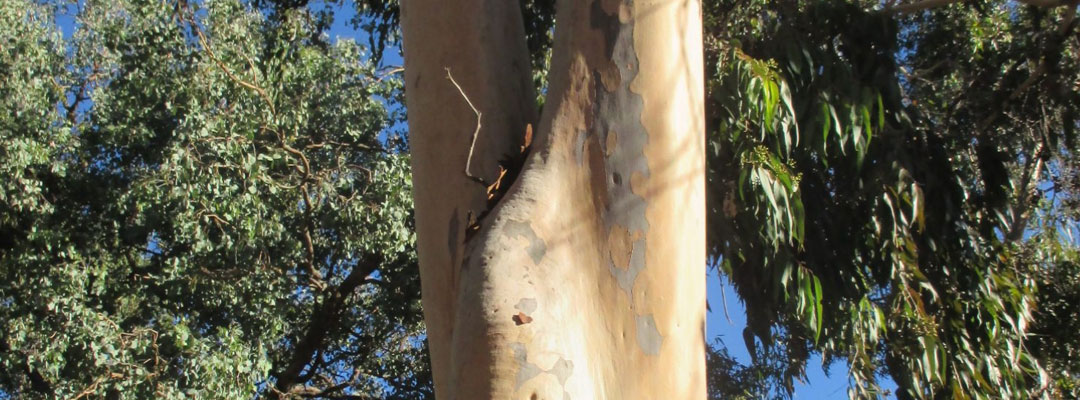
‘Elephant ears” can be an indication of a compression fork, where the acute angle of the fork results in included bark which, mechanically, is equivalent to a crack. Such forks are more likely to fail as the two stems are not sufficiently bonded together.
The bulging reaction wood surrounding the union is an attempt by the tree to stabilise the inherent instability of the crack. The bigger, or pointier the ears, then the greater the internal crack. If the reaction growth starts to flatten out, becoming snub-nosed, then the tree has likely managed to occlude the crack, forming continuous growth rings (rather than 2 rings compressed together, like squishing two tennis balls together).
Reducing the weight of the stems through end weight reduction pruning is one of the most effective ways of mitigating the risk of stem failure. Bracing the stems with steel cable or a more dynamic rope system isn’t likely to reduce the likelihood of failure; however such systems do provide a fail-safe, catching the failed stem before it strikes the ground (or other target), which is why they are often used in conjunction with end-weight reduction pruning.
If you are concerned about such a union then please don’t hesitate to contact Oldmeadow Arboriculture.
